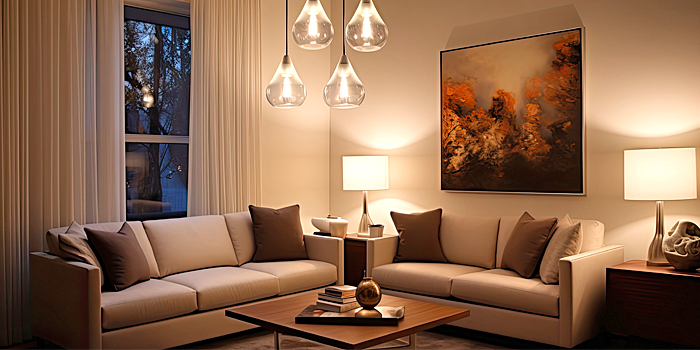
How to Choose Energy-Efficient Lighting for Sustainable Homes
Switching to energy-efficient lighting is one of the simplest and most cost-effective steps homeowners can take towards more sustainable home lighting. With energy bills continuing to rise and environmental awareness at an all-time high, understanding your lighting options has never been more important.
This guide walks you through everything you need to know — from LED technology and smart controls to eco-friendly fixtures and room-by-room recommendations — so you can make informed choices that lower your bills, reduce your carbon footprint, and still look beautiful in your home.
Summary: Key Takeaways
-
LED technology is the gold standard for energy-efficient home lighting, offering up to 90% energy savings and lifespans of up to 50,000 hours
-
Colour temperature (measured in Kelvin) determines the mood of a room — choose warm whites for living spaces, cooler whites for kitchens and bathrooms
-
Smart lighting controls — dimming, scheduling, and sensors — multiply the efficiency gains of LED technology
-
Room-by-room planning ensures the right balance of efficiency and atmosphere throughout your home
-
Sustainable fixture choices — materials, longevity, and repairability — complete a truly eco-conscious approach to home lighting
-
Check energy labels and look for A–C rated products when purchasing bulbs or integrated fittings
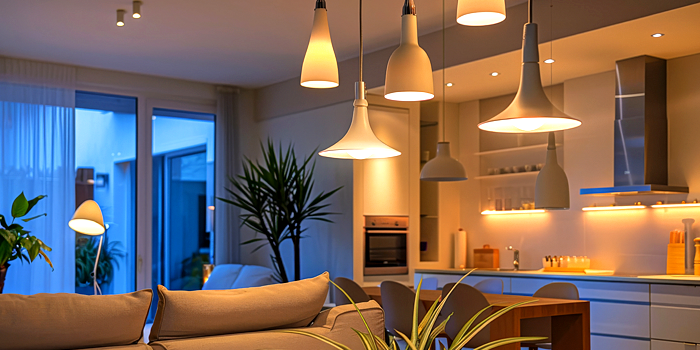
Why Energy-Efficient Lighting Matters
Lighting accounts for around 11–15% of the average UK household's electricity bill. Historically, incandescent bulbs converted only about 10% of energy into light, wasting the rest as heat. Today's energy-efficient alternatives — primarily LED technology — convert up to 90% of energy into light, representing a dramatic improvement.
Beyond the financial savings, energy-efficient lighting directly reduces your home's carbon emissions. With the UK committed to reaching net zero by 2050, every household upgrade contributes to that national goal. Sustainable lighting choices also tend to last significantly longer, meaning fewer bulbs going to landfill and less frequent replacement costs.
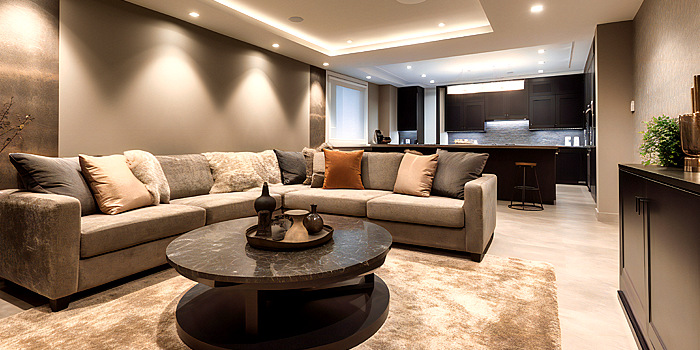
Understanding LED Technology: The Foundation of Efficient Lighting
What Is an LED?
LED stands for Light Emitting Diode. Unlike incandescent or halogen bulbs — which heat a filament to produce light — LEDs produce light through the movement of electrons in a semiconductor material. This process is highly efficient and generates very little waste heat.
Key Benefits of LED Lighting
-
Energy savings of up to 90% compared to traditional incandescent bulbs
-
Lifespan of 15,000–50,000 hours, versus 1,000 hours for a standard bulb
-
Lower running costs: a typical LED bulb costs under £2 per year to run, compared to approximately £8–£10 per year for a 60W incandescent equivalent — saving around £7–£8 per bulb annually (Energy Saving Trust)
-
Instant full brightness with no warm-up time
-
Available in a wide range of colour temperatures (more on this below)
-
Dimmable options compatible with smart home systems
-
Environmentally safer: LEDs contain no mercury, unlike older compact fluorescent lamps (CFLs)
LED vs. CFL vs. Halogen
Type
Energy Use
Lifespan
Eco Rating
LED
Very Low
15,000–50,000 hrs
⭐⭐⭐⭐⭐
CFL
Low
6,000–10,000 hrs
⭐⭐⭐
Halogen
High
~2,000 hrs
⭐⭐
Incandescent
Very High
~1,000 hrs
⭐
While CFLs were the go-to energy-saving option in the 2000s, LEDs have now comprehensively surpassed them in efficiency, lifespan, and environmental profile. Halogen bulbs have been largely phased out across the EU and UK under energy efficiency regulations.
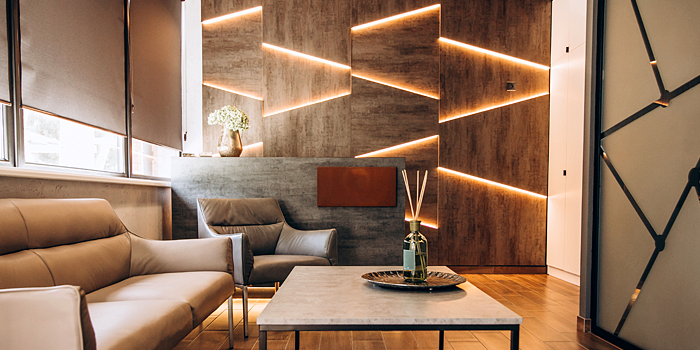
Colour Temperature: Getting the Right Light for Each Room
One reason some homeowners resist switching to LED is concern about light quality — the cold, harsh light associated with older energy-saving bulbs. Modern LEDs, however, are available across a full spectrum of colour temperatures, measured in Kelvin (K).
-
2700K–3000K (Warm White): Soft, golden light — ideal for living rooms, bedrooms, and dining rooms where a cosy, relaxed atmosphere is desired
-
3500K–4000K (Cool White/Neutral): Crisp, clean light — well-suited to kitchens, bathrooms, and home offices
-
5000K–6500K (Daylight): Bright, blue-toned light — best for task lighting, garages, or workspaces
Tip: For most UK living spaces, 2700K–3000K LEDs replicate the warm glow of traditional incandescent bulbs most closely, making the transition seamless.
CRI: Colour Rendering Index
Alongside colour temperature, look for the Colour Rendering Index (CRI) when choosing LED bulbs. CRI measures how accurately a light source renders colours compared to natural daylight, on a scale of 0–100.
-
CRI 80+ is acceptable for general home use
-
CRI 90+ is recommended for spaces where colour accuracy matters — kitchens, bathrooms, art display areas
High-CRI LEDs may cost slightly more, but they produce noticeably richer, more natural-looking light. For a deeper dive into lumens, wattage equivalents, and other bulb specs, read our guide to understanding bulb specifications.
Energy-Efficient Ceiling Lights: Room-by-Room Guide
Living Room Lighting Ideas
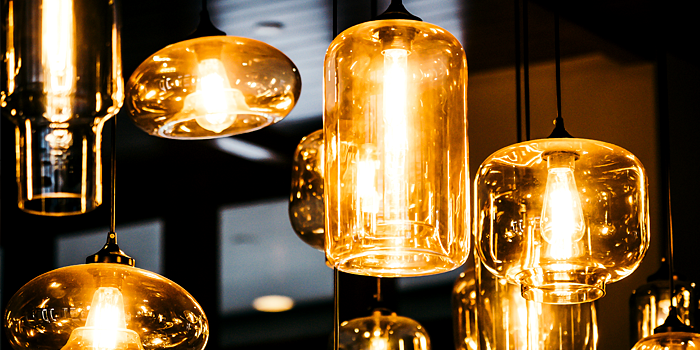
The living room is often the most-used space in a home, making lighting efficiency here particularly impactful. Consider a modern LED ceiling light or a contemporary pendant fitting as your main source, supplemented by dimmable floor lamps and table lamps for layered, flexible lighting.
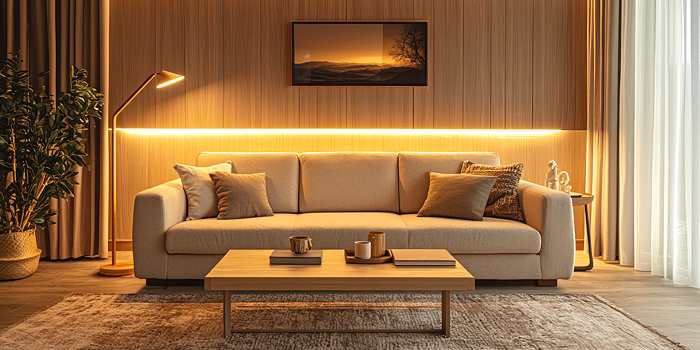
LED ceiling lights with integrated dimming allow you to reduce energy use further during evenings when full brightness isn't needed. Warm white LEDs (2700K) create an inviting atmosphere without sacrificing efficiency. For a stylish ambient effect, LED strip lights placed behind a media unit or along a shelving recess add a warm glow while using minimal energy.
Kitchen Lighting Ideas
Kitchens benefit from cool white LED ceiling lights (3500K–4000K) that support task lighting for food preparation. Kitchen pendant lights above an island combine style with focused illumination. Under-cabinet LED strip lights are highly efficient and dramatically improve the functionality of work surfaces — ideal for illuminating worktops without the need for overhead fittings.
Look for IP-rated fittings in kitchen areas near sinks or steam sources.
Bedroom Lighting Ideas
For bedrooms, warm white LEDs (2700K) promote relaxation and support healthy sleep patterns by avoiding blue-spectrum light in the evening. LED ceiling lights with dimmer compatibility are ideal — they allow you to wind down lighting levels as the evening progresses. Bedside lamps with low-wattage LED bulbs complement central ceiling fittings efficiently. LED strip lights fitted behind a headboard also make a popular and energy-efficient choice for soft ambient lighting.
For children's bedrooms, look for energy-efficient fittings with diffused light sources to reduce glare.
Bathroom Lighting Ideas
Bathroom lighting requires IP-rated fittings (IP44 or higher) to ensure safety in damp environments. LED bathroom ceiling lights are now widely available in elegant designs that meet IP requirements. Warm white LEDs make bathrooms feel spa-like, while neutral white options suit grooming tasks better. Avoid leaving bathroom lights on unnecessarily — sensor-activated or timer-controlled options can help.
Hallway Lighting Ideas
Hallways are often lit for extended periods, making efficiency especially worthwhile. LED flush ceiling lights are ideal for lower ceilings, while pendant lights add character in higher-ceilinged Victorian or Edwardian hallways. Consider motion-sensor fittings for hallways and landings — these ensure lights are only on when needed.
Dining Room Lighting Ideas
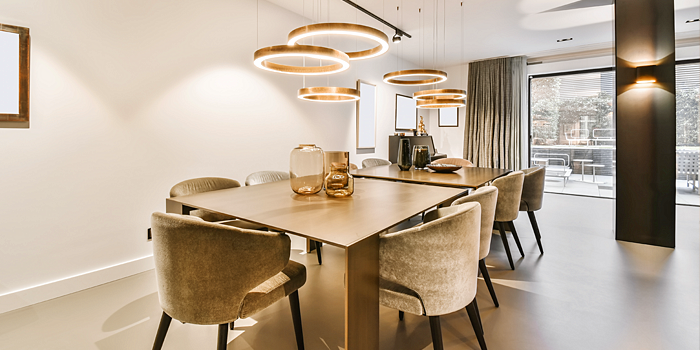
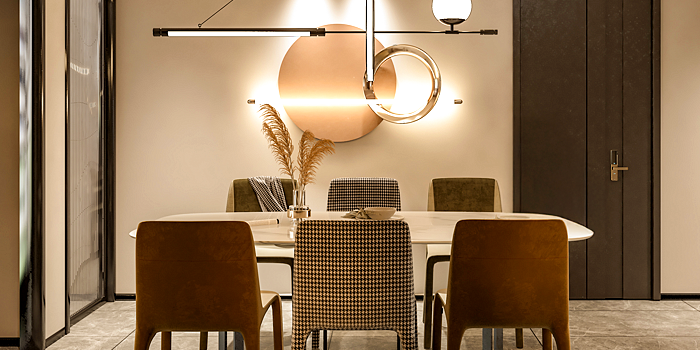
A pendant ceiling light or chandelier above the dining table creates a focal point while keeping the rest of the room in softer light. Modern LED chandeliers and pendant fittings combine drama and efficiency. Dimmable LED systems allow you to shift from bright dinner-party lighting to a more intimate atmosphere at the touch of a button.
Outdoor Lighting Ideas
Outdoor lighting is one of the most practical areas to switch to energy-efficient LED solutions. Outdoor lights with sensor activation are among the most popular choices for UK homes — PIR-triggered LED fittings ensure your exterior lights only illuminate when someone is present, eliminating unnecessary energy use through the night. From wall lanterns and floodlights to pathway LEDs and porch lights, LED outdoor lighting offers long-lasting performance in all weather conditions. Motion-sensor outdoor lights also improve home security without the running costs of lights left on continuously.
Smart Lighting: The Next Step in Energy Efficiency
Smart lighting systems take energy efficiency further by giving you precise control over when, where, and how bright your lights are. Key features to look for include:
Dimming & Scheduling
Dimmable LED fittings used at 50% brightness use significantly less energy and extend bulb lifespan. Smart systems allow you to schedule lights to turn off automatically — ideal for hallways, bathrooms, or rooms where lights are frequently left on by accident.
Motion & Presence Sensors
PIR (Passive Infrared) sensors detect movement and activate lights only when a room is occupied. This is particularly effective in hallways, utility rooms, garages, and outdoor areas. Outdoor sensor lights are one of the most popular smart lighting applications — they improve security while ensuring exterior lights aren't burning energy through the night unnecessarily.
Smart Bulbs and App Control
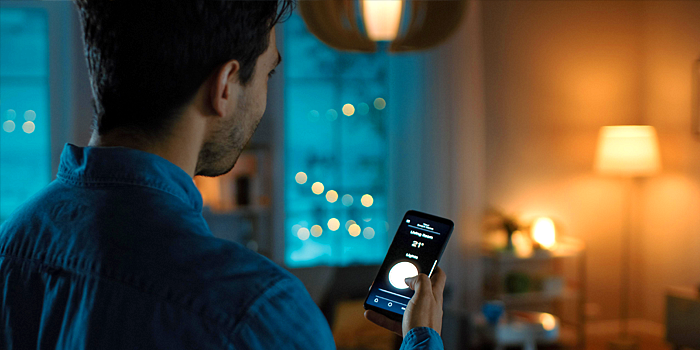
Smart bulbs (compatible with Alexa, Google Home, or Apple HomeKit) allow remote control via smartphone. You can turn lights off when you've left the house, set scenes for different moods, and monitor energy usage in real time.
Integration with Renewable Energy
If your home has solar panels, smart lighting systems can be programmed to maximise usage during peak solar generation hours, further reducing grid energy dependency.
Sustainable Fixture Materials and Design Choices
Energy efficiency isn't only about the bulb — the fixture itself matters too. When choosing sustainable lighting fittings, consider:
-
Longevity and repairability: Opt for quality fixtures with replaceable components rather than disposable all-in-one units
-
Materials: Look for fittings made from recycled metals, responsibly sourced wood, or natural materials such as rattan and bamboo — these are increasingly available in contemporary lighting ranges
-
Finish quality: Well-finished brass, brushed nickel, or powder-coated steel fittings resist corrosion and last far longer than cheaper alternatives
-
Integrated LED vs. retrofit: Integrated LED fittings (where the LED module is built in) can be highly efficient, but ensure the manufacturer offers replacement modules; retrofit LED fittings (using standard bulb sockets) give you more flexibility to upgrade as technology improves
Reading Energy Labels and Efficiency Ratings
Since September 2021, the UK and EU have used a revised energy label system for light sources, with ratings from A to G. This replaced the older A+/A++ system, which had become outdated as LED technology advanced.
-
A-rated bulbs represent the very best in efficiency — currently rare but increasingly available as technology develops
-
B and C-rated LED products are typical for today's high-quality LEDs
-
D and below covers halogen and less efficient products
Always check the energy label when purchasing bulbs or integrated fittings, and look for the UK Ecodesign Regulations compliance mark, which ensures products meet minimum efficiency and lifespan standards.
Practical Tips for Reducing Lighting Energy Use Today
While upgrading fixtures and bulbs is the most impactful step, several straightforward habits also make a meaningful difference:
-
Switch off lights when leaving a room — obvious but often overlooked. Making it a household habit — particularly in rooms like the kitchen and bathroom — can add up to a noticeable reduction in your annual electricity bill.
-
Replace remaining halogen or incandescent bulbs first — these offer the greatest savings when swapped to LED. A single 60W incandescent replaced with an LED equivalent can save around £7–£8 per year, so prioritising the highest-wattage bulbs in your home delivers the fastest return.
-
Use task lighting instead of lighting whole rooms — a desk lamp or bedside light uses far less energy than a ceiling fitting. Rather than illuminating an entire living room or bedroom for one person reading or working, a focused task light keeps energy use to a minimum.
-
Maximise natural light — light-coloured walls and reflective surfaces reduce the need for artificial lighting during the day. In UK homes, painting walls in off-white or pale neutral tones can reduce daytime artificial lighting needs significantly, particularly in north-facing rooms where natural light is limited.
-
Install dimmer switches — even without a smart system, dimmers reduce energy use and extend bulb life. Running LEDs at 70–80% brightness rather than full power noticeably lowers consumption over time and is barely perceptible to the eye.
-
Audit your outdoor lighting — exterior lights left on overnight are a significant source of wasted energy; timers and sensors solve this instantly. Walk around your property after dark and note which lights are on unnecessarily — replacing these with sensor-activated LED fittings is one of the quickest efficiency wins available to UK homeowners.
Shop Energy-Efficient Lights at Abbeygate Lighting
At Abbeygate Lighting, we stock a wide range of energy-efficient LED ceiling lights, pendant fittings, floor lamps, table lamps, and outdoor lights designed to suit every room and every style — from sleek contemporary designs to elegant traditional fittings.
Whether you're looking for modern LED ceiling lights for your living room, IP-rated LED fittings for your bathroom, motion-sensor outdoor lights for your garden, or smart-compatible pendant lights for your kitchen island, our range makes sustainable lighting accessible without compromising on aesthetics.
Browse our full lighting collectionsor visit our showrooms in Norwich, Bury St. Edmunds, or Felixstowe, to find fittings that combine beautiful design with genuine energy efficiency — and make the switch to a more sustainable home today.